
Does Yoga Build Muscle? How Yoga Helps Build Muscle?
Yoga has a long history of being viewed as a practice for relaxation, balance, and flexibility. Many people wonder if it can also play a role in building muscle strength.
Traditional weightlifting often takes the spotlight for muscle growth, but yoga challenges the body in unique ways that engage multiple muscle groups at once.
Holding poses, maintaining balance, and flowing through sequences all require consistent effort from both large and small muscles. This constant resistance trains endurance, improves stability, and gradually develops lean strength.
The key lies in the type of yoga practiced and the intensity of each session. Styles such as power yoga, Ashtanga, and Vinyasa place a higher demand on muscles, making them more effective for strength building.
Yoga may not create bulky muscles like heavy lifting does, but it supports toned development, better posture, and functional strength that benefits everyday movement.
Does Yoga Build Muscle?
Yoga often brings to mind calm breathing, stretching, and quiet meditation. Yet, there is another side to it. Yoga is not only for flexibility or relaxation. It also requires strength.
Many poses demand balance, control, and steady muscle activation. This raises a common question: Does yoga build muscle?
The short answer is yes, yoga does build muscle. But the way it builds muscle is not the same as lifting weights. Yoga develops lean strength, improves body control, and supports muscle endurance.
It may not give the same bulky look as a gym workout, but it can still make the body stronger, more defined, and more functional in daily life.
This article explains how yoga builds muscle, which styles and poses help most, and what results you can expect from regular practice.
How Yoga Builds Muscle?
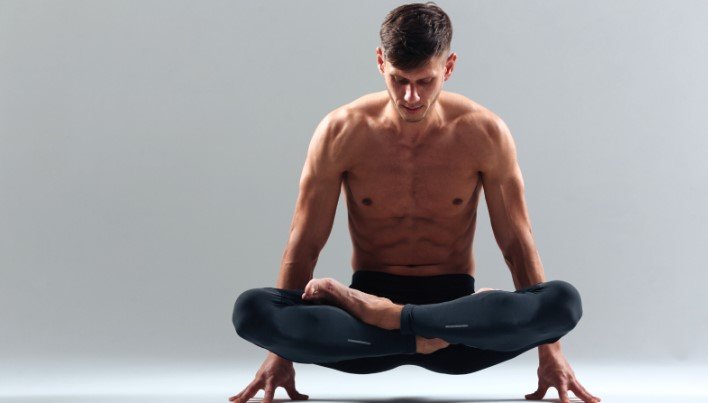
Yoga uses your own body weight as resistance. Unlike weightlifting, which requires dumbbells or machines, yoga forces the muscles to hold and stabilize the body in challenging positions.
This creates what is called isometric contraction – holding the muscles tight without movement. Over time, this leads to strength and muscle growth.
The Science Behind It
-
Muscle Activation – Many yoga poses require holding the body in a way that engages multiple muscles at once. For example, a simple plank uses the arms, shoulders, chest, core, and legs together.
-
Progressive Overload in Yoga – In traditional strength training, progressive overload comes from lifting heavier weights. In yoga, it comes from holding poses longer, adding repetitions, or moving into more advanced positions.
-
Stabilizer Muscles – Yoga strengthens small muscles that support the joints. These are often ignored in regular gym training but are essential for balance and injury prevention.
-
Mind-Muscle Connection – Yoga builds awareness. Each pose teaches you to focus on contracting and releasing specific muscles, which improves strength more effectively.
Muscle Groups Worked by Yoga
Upper Body Strength
-
Plank Pose and Chaturanga – These work the chest, triceps, biceps, shoulders, and forearms.
-
Downward Dog – Strengthens shoulders and arms while stretching the spine.
-
Crow Pose and Handstands – Train the arms, shoulders, and wrists with bodyweight pressure.
Core Strength
-
Boat Pose – Targets abs and hip flexors.
-
Warrior III – Demands balance and deep core engagement.
-
Side Plank – Strengthens obliques and stabilizers.
Lower Body Strength
-
Chair Pose – Works quadriceps, hamstrings, and glutes.
-
Warrior Series – Strengthens thighs, calves, and hips.
-
Goddess Pose – Engages inner thighs and glutes.
Back and Chest
-
Cobra and Upward Dog – Strengthen the spine and chest.
-
Bridge Pose – Engages glutes, lower back, and hamstrings.
-
Locust Pose – Targets the entire back for posture support.
Yoga vs. Weightlifting for Muscle Building
Yoga and weightlifting both build strength, but they work in different ways:
| Factor | Yoga | Weightlifting |
|---|---|---|
| Muscle Growth | Builds lean, toned muscles | Builds large muscle mass |
| Flexibility | Improves flexibility | May reduce flexibility if not balanced |
| Equipment | Only body weight | Requires weights and machines |
| Endurance | Builds stamina through holds | Builds explosive strength |
| Injury Risk | Lower risk if done correctly | Higher risk with heavy lifting |
Yoga will not give the same bulky muscle growth as weightlifting. But it will create strength that supports daily life and reduces injury risk.
Benefits of Muscle Growth Through Yoga
Balanced Body Strength
Yoga builds strength evenly across the body. Both left and right sides work equally, unlike some gym workouts where one side can dominate.
Flexibility with Power
Many exercises shorten muscles, but yoga stretches and strengthens at the same time. This creates long, lean muscles that are strong yet flexible.
Injury Prevention
By working stabilizer muscles and improving joint mobility, yoga protects the body from strains and injuries.
Mind-Body Awareness
Unlike gym workouts, yoga connects breath with movement. This helps you control your muscles more consciously, improving posture and reducing stress.
Best Yoga Styles for Building Muscle
Not all yoga classes are the same. Some focus more on meditation, while others are physically demanding. For muscle building, these styles are most effective:
-
Power Yoga – Fast-paced with strong sequences that increase endurance and strength.
-
Ashtanga Yoga – Follows a set series of poses that get more challenging over time.
-
Vinyasa Yoga – Continuous flow of poses that keep muscles active without rest.
-
Bikram (Hot Yoga) – Practiced in heated rooms, increases muscle engagement and stamina.
-
Hatha Yoga – Slower but focuses on holding poses longer for deep strength.
How to Maximize Muscle Growth with Yoga?
-
Hold Poses Longer – Start with 20–30 seconds, increase to 1 minute or more.
-
Repeat Poses – Do multiple rounds of strength-focused poses in one session.
-
Focus on Form – Proper alignment activates the right muscles.
-
Add Variations – Challenge yourself with advanced versions of basic poses.
-
Practice Consistently – At least 3–5 sessions per week.
-
Fuel Your Body – Muscle growth also needs protein and proper nutrition.
Sample Weekly Yoga Plan for Strength
-
Day 1: Vinyasa Flow (focus on Plank, Chaturanga, Warrior poses)
-
Day 2: Rest or light stretching
-
Day 3: Power Yoga (include Chair Pose, Boat Pose, Side Plank)
-
Day 4: Hatha Yoga (long holds in poses like Warrior II, Bridge Pose)
-
Day 5: Ashtanga Yoga (structured sequence)
-
Day 6: Gentle yoga or mobility practice
-
Day 7: Rest
FAQs About Yoga and Muscle Growth
Does yoga build the same muscles as the gym?
Yoga builds strength across the body, but not the same bulky size as gym workouts.
Can yoga replace lifting weights?
For lean muscle and endurance, yes. For bigger muscle mass, no. Both together work best.
How many times per week should I do yoga to build strength?
Three to five times per week gives the best results.
Is yoga enough to stay fit without the gym?
Yes, if practiced regularly with a focus on strength poses, it can keep the body fit and toned.
Which poses are best for beginners to build muscle?
Plank, Chair Pose, Warrior I & II, Boat Pose, and Bridge Pose are great starting points.
Conclusion
Yoga does build muscle, though in a unique way. Instead of bulky growth, yoga creates lean, strong, and flexible muscles. It supports balance, posture, and daily movement while also calming the mind.
Weightlifting may be better for size, but yoga offers strength that lasts and protects the body. A regular practice shapes not only muscles but also improves endurance, flexibility, and mental focus.