Does Swimming Build Muscle? The Truth Behind Water Workouts
Many people hit the pool to stay fit, improve stamina, and enjoy a low-impact workout. The question often arises does swimming actually build muscle, or is it only good for cardio? Swimming challenges the entire body, from the shoulders and chest to the legs and core.
Each stroke forces muscles to push against water resistance, which is denser than air. This constant resistance encourages muscle fibers to grow stronger and more defined.
Different strokes target different areas, with freestyle and butterfly shaping the upper body while breaststroke and backstroke strengthen the legs and core. Unlike lifting weights, swimming develops lean muscle rather than bulky size, giving the body a toned and athletic look.
The best part is that swimming combines strength training and cardio in one workout, making it efficient and time-saving. Regular pool sessions not only improve endurance but also help muscles adapt, grow, and become more powerful.
Does Swimming Build Muscle?
Swimming is often known as a cardio workout, but it does more than improve heart health. It challenges nearly every muscle group in the body.
Each kick, stroke, and pull works against water resistance, which is much stronger than air. This makes swimming a natural strength-building exercise.
People often wonder if it can truly build muscle or if it only improves endurance. The answer depends on how you swim, the type of strokes you use, and how often you train.
How Swimming Builds Muscle?
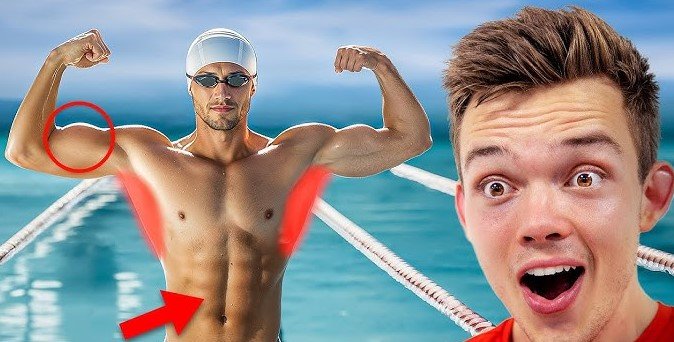
Water creates resistance that is about 12 to 15 times stronger than air. Every movement in the pool becomes harder, and the body must push and pull with more effort.
This constant resistance acts like light weight training. It does not overload muscles the way heavy lifting does, but it provides enough challenge to stimulate growth and strength.
Muscle building happens through repeated contraction and recovery. Swimming forces muscles to work continuously for long periods, which builds endurance-based muscle fibers.
These fibers grow lean, firm, and strong. This is why swimmers have toned bodies instead of bulky frames.
Main Muscle Groups Activated
Each stroke has a unique effect on the body:
-
Freestyle (Front Crawl): Works shoulders, triceps, chest, and core. Legs kick constantly, targeting quadriceps and calves.
-
Backstroke: Strengthens the back muscles, improves shoulder flexibility, and works the glutes.
-
Breaststroke: Engages chest, inner thighs, glutes, and hips. Strong leg movements make it one of the best for lower-body strength.
-
Butterfly: One of the most powerful strokes. It targets the chest, shoulders, arms, and core while demanding strong kicks from the legs.
By switching strokes, swimmers can train the whole body more evenly.
Swimming vs Weight Training
Swimming and weight training are different in how they affect muscle growth.
-
Swimming: Builds lean muscles, endurance, and full-body strength. It protects joints since water supports body weight. It develops more stamina than raw power.
-
Weight Training: Builds larger, bulkier muscles by creating micro-tears in muscle fibers. It isolates specific muscles for faster size growth.
For athletes or those wanting muscle size, weight training is better. For people who want overall body strength, balance, and tone, swimming is an excellent option. Many athletes combine both for best results.
Benefits of Swimming for Muscle Development
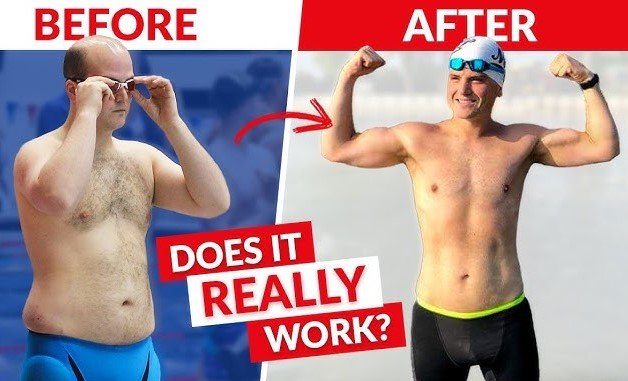
-
Works multiple muscle groups at once
-
Improves flexibility through wide, flowing movements
-
Provides resistance without heavy impact
-
Strengthens stabilizing muscles in the core
-
Supports recovery after injury or tough workouts
-
Burns fat while toning muscles
How to Build More Muscle Through Swimming?
To get more muscle growth, swimming should be done with structure, not just casual laps.
Use Interval Training
Alternate between fast and slow laps. Sprinting in water pushes muscles harder, similar to resistance training.
Add Equipment
-
Kickboard: Focuses on legs and core.
-
Pull Buoy: Targets upper body strength.
-
Hand Paddles: Increases resistance for arms and shoulders.
-
Fins: Builds stronger legs and improves ankle flexibility.
Focus on Technique
A powerful stroke with correct form works muscles more effectively than sloppy movements.
Train Consistently
Muscle growth needs repeated stress. Swimming three to four times a week keeps progress steady.
Best Strokes for Building Muscle
-
Butterfly: Builds chest, shoulders, arms, and core.
-
Breaststroke: Strengthens thighs, chest, and hips.
-
Freestyle: Improves endurance and overall tone.
-
Backstroke: Builds back muscles and corrects posture.
Final Thoughts
Swimming does build muscle, but it builds it differently than weight training. It makes muscles lean, strong, and full of endurance. It also trains the whole body in one workout while protecting the joints.
People who want a toned, athletic build can rely on swimming alone. Those aiming for large muscle mass may need to add weight training along with swimming for balance.
FAQs
1. Does swimming make muscles bigger or just toned?
Swimming tones muscles and builds strength, but it usually does not make them very big.
2. Can swimming give a six-pack?
Yes, core muscles work in every stroke. With regular training and a good diet, swimming can help reveal abs.
3. How long does it take to build muscle with swimming?
Visible results can show in 6 to 8 weeks with consistent swimming three to four times a week.
4. Is swimming enough for muscle growth without the gym?
It builds lean muscle, but for maximum growth, combining swimming with weight training is best.
5. Which stroke is best for upper-body muscles?
The butterfly stroke is strongest for the chest, arms, and shoulders.