What Muscles Does a Rowing Machine Work? How It Works?
A rowing machine offers a full-body workout that challenges both strength and endurance. Every stroke engages multiple muscle groups, providing a unique blend of cardio and resistance training.
Legs power the drive phase, activating quads, hamstrings, glutes, and calves to push off the footplate. Core muscles stabilize the body, ensuring balance and proper posture throughout the movement.
Back muscles, including the lats and rhomboids, pull the handle toward the body, improving upper-body strength. Arms, shoulders, and forearms assist in the finishing motion, creating a seamless flow from legs to upper body.
Rowing machines also boost cardiovascular fitness, making the heart and lungs work harder while toning muscles. This combination helps burn calories efficiently while building lean muscle.
Understanding which muscles activate during each phase enhances workout effectiveness and prevents injury, turning a simple indoor rowing session into a powerhouse training routine for strength, endurance, and overall fitness.
What Muscles Does a Rowing Machine Work?
Rowing machines provide one of the most complete workouts available. They strengthen muscles, improve endurance, and burn calories.
Rowing combines cardio and resistance, making it both effective and safe. Understanding the exact muscles a rowing machine works helps improve performance and avoid injury.
How Rowing Works?
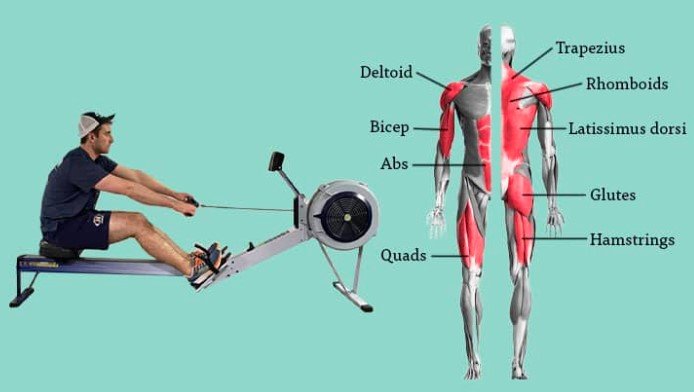
Rowing simulates the movement of rowing a boat. The motion has three main phases:
-
The Catch – Lean forward, bend your knees, and extend your arms toward the handle.
-
The Drive – Push with your legs, then pull with your arms to move the handle toward your chest.
-
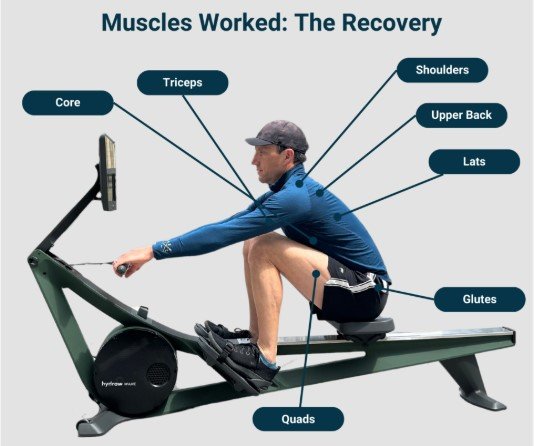
The Recovery – Extend your arms and slide forward while bending your knees.
Each phase engages different muscle groups. Maintaining proper form ensures maximum muscle activation and reduces strain.
Major Muscles Worked by a Rowing Machine
1. Leg Muscles
Legs provide the main driving force in rowing. Pushing off the seat uses multiple leg muscles:
-
Quadriceps (Front Thighs): Power the push-off during the drive phase. Strong quads increase rowing strength.
-
Hamstrings (Back Thighs): Bend the knees and stabilize legs. Hamstrings balance the power from quads.
-
Glutes (Butt Muscles): Extend the hips during the push. Strong glutes improve speed and endurance.
-
Calves: Stabilize the feet and ankle movement. Calves prevent slipping and support leg drive.
2. Back Muscles
Back muscles handle the pulling motion and maintain posture. Rowing strengthens both upper and lower back:
-
Latissimus Dorsi (Lats): Large side-back muscles. Pull the handle toward the body efficiently.
-
Trapezius (Traps): Upper back and shoulder muscles. Lift and stabilize shoulders during rowing.
-
Rhomboids: Between shoulder blades. Pull shoulders together, improving posture and back strength.
-
Erector Spinae: Lower back muscles. Keep the spine straight and protect it from strain.
3. Arm Muscles
Arms assist in pulling and controlling the handle. They also help stabilize the motion:
-
Biceps: Bend the elbows and pull the handle toward the chest.
-
Forearms: Grip strength. Firm grip ensures smooth motion and prevents the handle from slipping.
-
Triceps: Assist in extending the arms during the recovery phase.
4. Core Muscles
The core keeps the body stable and prevents back injuries. Rowing builds strength in the abdominal area:
-
Abdominals (Abs): Stabilize the torso during both drive and recovery.
-
Obliques: Side abs. Help twist and balance slightly while rowing.
-
Lower Back Muscles: Work with the abs to maintain posture and smooth movement.
5. Additional Muscles
-
Hip Flexors: Control leg movements during recovery.
-
Chest Muscles (Pectorals): Slightly engaged during the arm pull phase.
-
Shoulder Muscles (Deltoids): Help with arm movement and stabilization.
How Rowing Benefits the Body?
-
Cardiovascular Health: Rowing raises heart rate, improving endurance and heart function.
-
Low-Impact Exercise: Gentle on knees and joints compared to running or jumping.
-
Calorie Burn: Combines cardio and strength, burning more calories per hour.
-
Full-Body Toning: Strengthens legs, back, arms, and core simultaneously.
-
Posture Improvement: Strengthens back and core, reducing slouching and back pain.
Tips for Maximum Muscle Engagement
-
Keep your back straight and core tight.
-
Push with legs first, then pull with arms.
-
Avoid hunching shoulders or rounding your back.
-
Use smooth, controlled motions instead of jerky pulls.
-
Start with moderate intensity and increase gradually.
-
Focus on both power and technique for the best results.
FAQs
1. Does rowing build muscle?
Yes. Rowing strengthens legs, back, arms, and core muscles. It also improves overall tone and endurance.
2. How many calories does rowing burn per hour?
Calorie burn depends on intensity and body weight. On average, 400–600 calories per hour at moderate effort.
3. Can rowing help reduce belly fat?
Rowing engages core muscles and burns calories. Combined with a healthy diet, it helps reduce fat around the stomach.
4. How often should I row for results?
3–5 sessions per week provide noticeable improvements in strength, endurance, and fitness.
5. Is rowing safe for beginners?
Yes, as long as proper form is followed. Start slowly and gradually increase duration and intensity.
6. How long should a rowing workout last?
For strength and endurance, 20–40 minutes per session works well. Include rest and stretching to prevent strain.
Conclusion
Rowing machines work nearly every major muscle in the body. Legs provide power, back and arms pull, and the core stabilizes the movement. Regular rowing improves strength, burns calories, and builds endurance.
Maintaining proper form maximizes benefits and reduces risk of injury. Rowing offers a full-body workout that is efficient, safe, and effective.